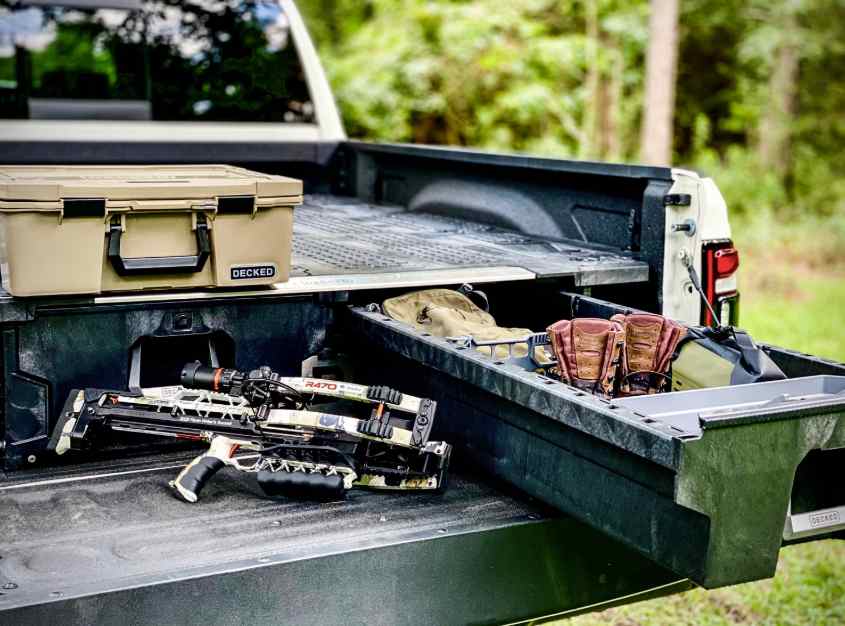
Utilizing every inch of available space in a pickup bed is essential for anyone hauling equipment, supplies, or outdoor gear. Standard crossovers and bulky chest boxes sit across the front of the bed, consuming valuable floor length and making it difficult to haul full sheets of plywood, ATV units, or long construction materials.
Side-mounted storage offers an efficient alternative by utilizing the unused space directly over and behind the wheel wells. Operational guidelines published by FRDM Fabs demonstrate that mounting storage units along the bed rails preserves clear bed floor length while providing rapid, waist-height access to tools without stepping into the vehicle. Planning a side-mounted layout improves cargo flexibility, balances vehicle payload, and keeps everyday supplies neatly organized.
1. Advantages of Side-Mounted Bed Storage
Understanding how side storage units function compared to traditional crossover boxes helps you design a practical layout tailored to your hauling needs.
Preserving Floor Length
Because side boxes mount along the inner walls of the bed, the central floor space remains completely open. This allows you to slide long items—such as lumber, ladders, or piping—all the way to the front bulkhead.
Easy Waist-Height Accessibility
Reaching into a traditional crossover box often requires climbing onto the rear tire or stepping into the bed. Side-mounted units are positioned directly along the bed rail, allowing you to access tools easily from outside the vehicle.
2. Key Factors When Planning Side Box Installation
Installing side-mounted storage requires careful measurement and structural evaluation to ensure proper fitment and safe vehicle operation.
- Wheel Well Clearance: Measure the height and length of your wheel arches. Side boxes must fit cleanly above or around the wheel well without interfering with suspension movement or bed liner contours.
- Bed Rail Support: Ensure your truck’s bed rails are structurally sound. High-quality side storage attaches securely to the inner bed lip, spreading weight evenly to avoid distorting sheet metal.
- Tonnea Cover Compatibility: If you plan to use a roll-up or folding bed cover, choose low-profile side storage units that sit flush beneath the top edge of the bed rails.
3. Balancing Vehicle Weight Distribution
Unevenly distributed weight negatively impacts vehicle handling, braking performance, and tire wear. Proper cargo placement keeps your truck stable on highway journeys and rough terrain.
- Distribute Heavy Items Evenly: Place heavy tools, recovery jacks, and fluids split between the left and right side boxes rather than overloading one side.
- Keep Mass Low: Store heavy iron tools and hardware in the lower section of the side box to maintain a low center of gravity.
- Avoid Rear Overhang Overloads: Position the main weight of the storage box over or slightly ahead of the rear axle rather than near the tailgate.
4. Internal Organization Strategies for Narrow Spaces
Side boxes feature a compact, vertical footprint that benefits from deliberate internal organization.
- Vertical Tool Slots: Store long hand tools like levels, pry bars, and torque wrenches vertically using built-in clip retainers.
- Small Parts Trays: Use removable bins or tote trays in the top section to keep small items like drill bits, fuses, and hardware from settling to the bottom.
- Padded Divider Walls: Install adjustable dividers to create dedicated slots for power tool bodies, preventing them from knocking against one another during transit.
5. Weatherproofing and Theft Prevention Best Practices
Exposed truck bed accessories are subjected to harsh highway winds, driving rain, and theft risks. Protecting your gear requires proper sealing and locking habits.
Weather Sealing Checklist
- Inspect the rubber bulb seal around the door opening regularly to ensure it remains pliable and tear-free.
- Clean dust and road grit off seal surfaces to maintain a watertight closure.
- Ensure drain channels around the door frame remain unobstructed so water sheds cleanly down the outside of the box.
Lock and Hinge Care
Lubricate stainless steel hinges and latch mechanisms twice a year with a dry lubricant spray. Regularly check that the locking cam engages firmly against the box frame to prevent door rattles and unauthorized access.
By utilizing side-mounted storage units, you keep the main floor of your truck bed free for large payloads while enjoying fast, organized access to your essential gear on every trip.